 EN
EN
 INA
INA
SNATIA 2026: Udayana University Hosts CSIRT Experts and the Bali Regional Police Cyber Investigation Directorate
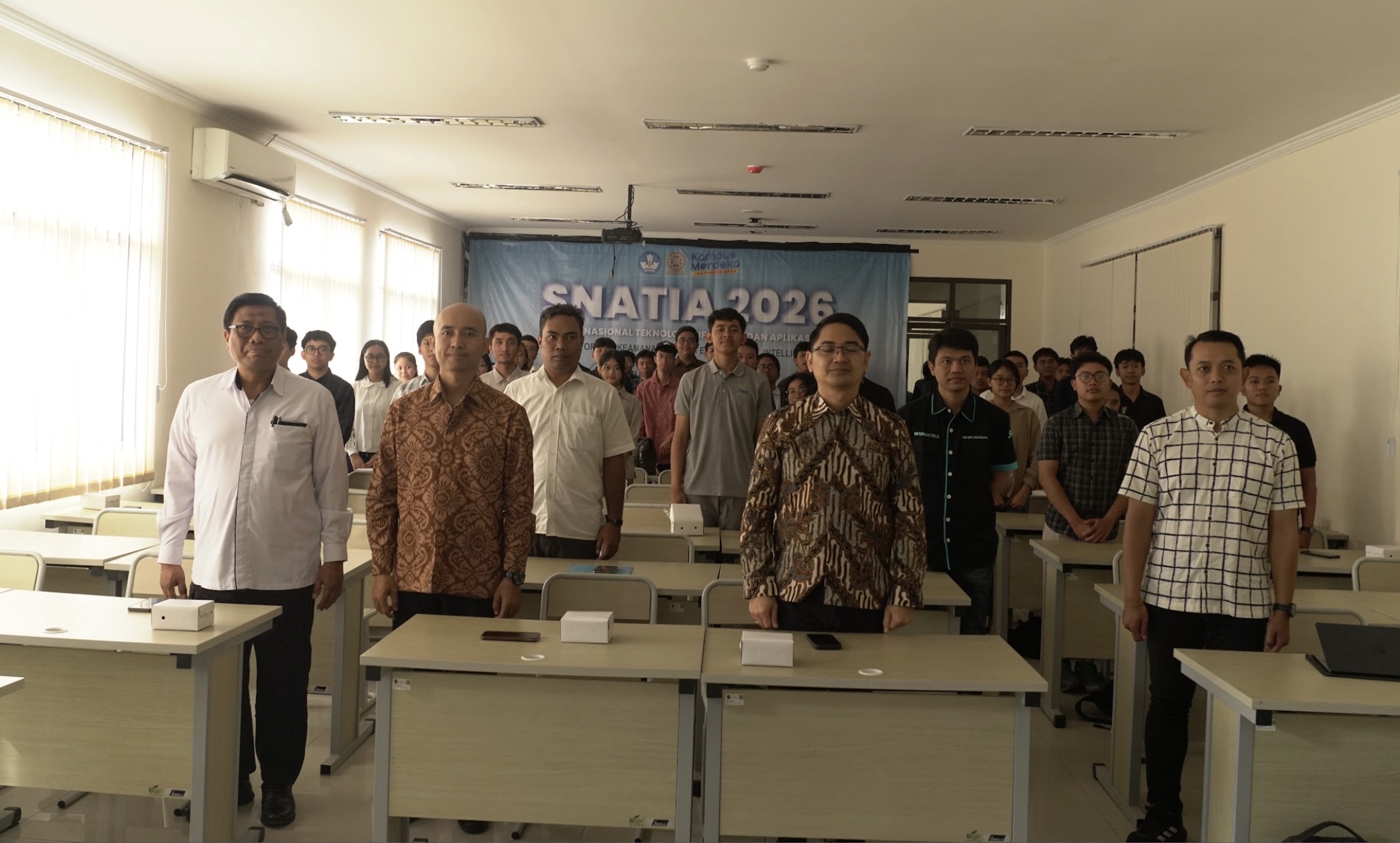
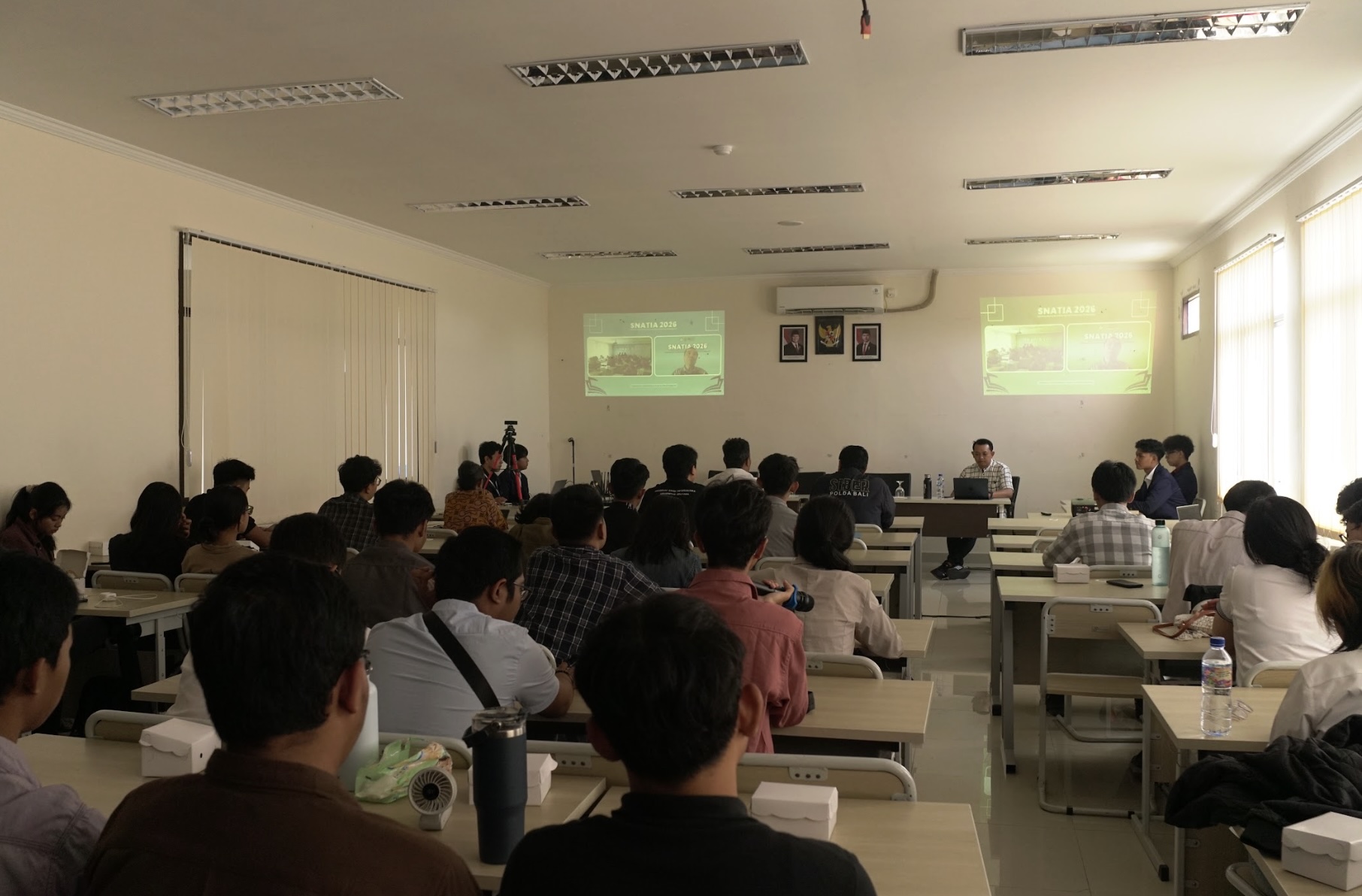
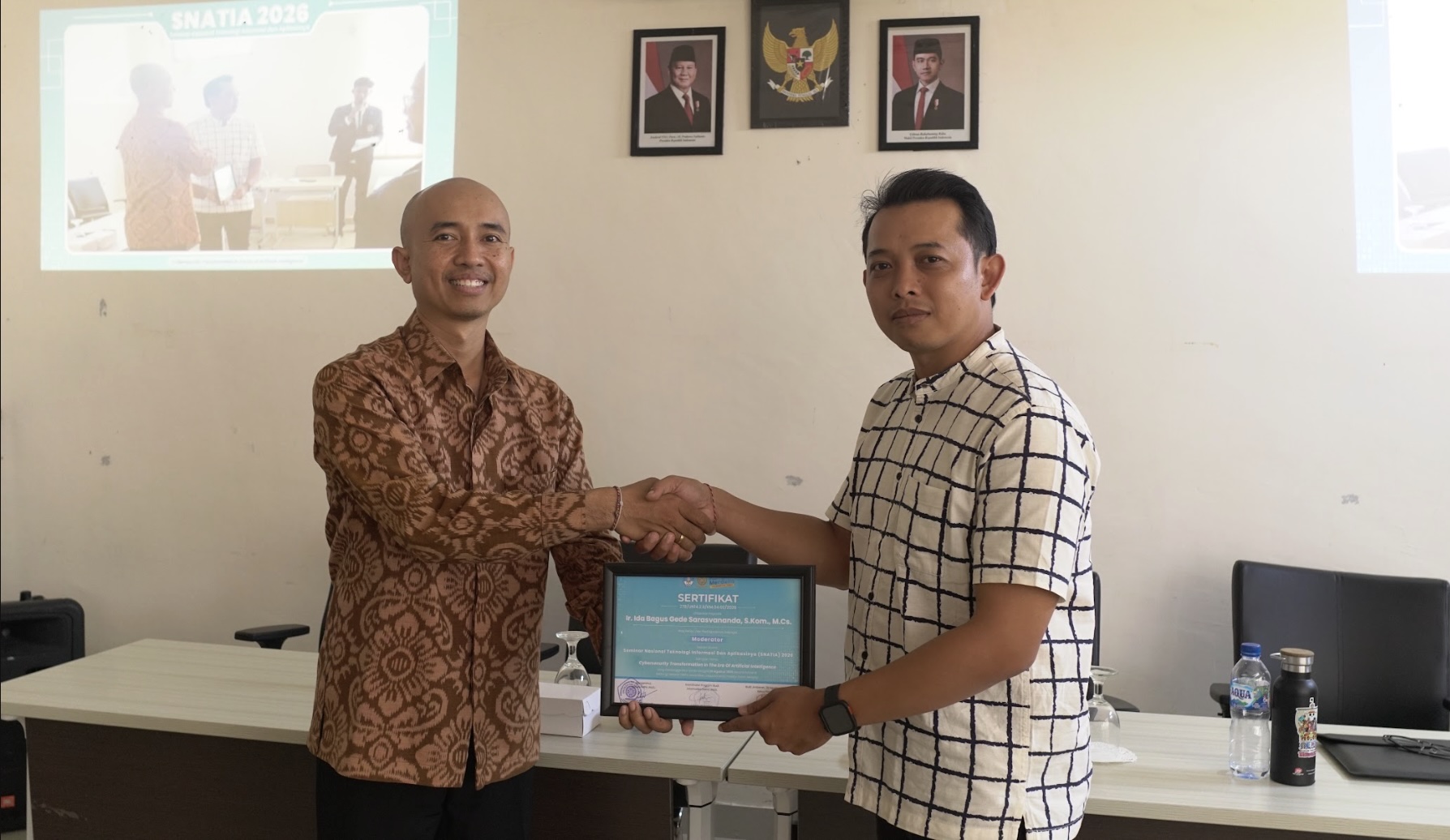
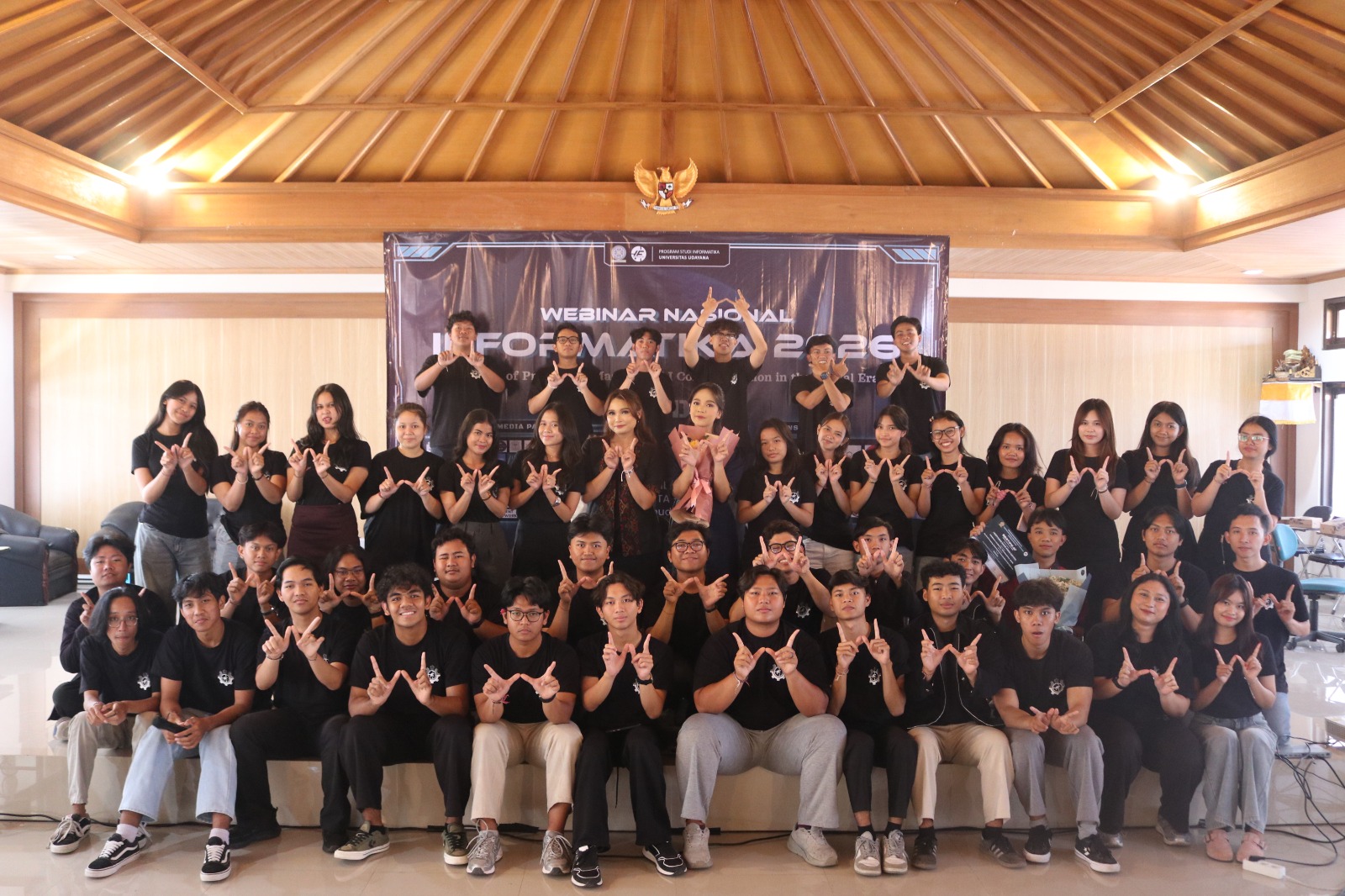
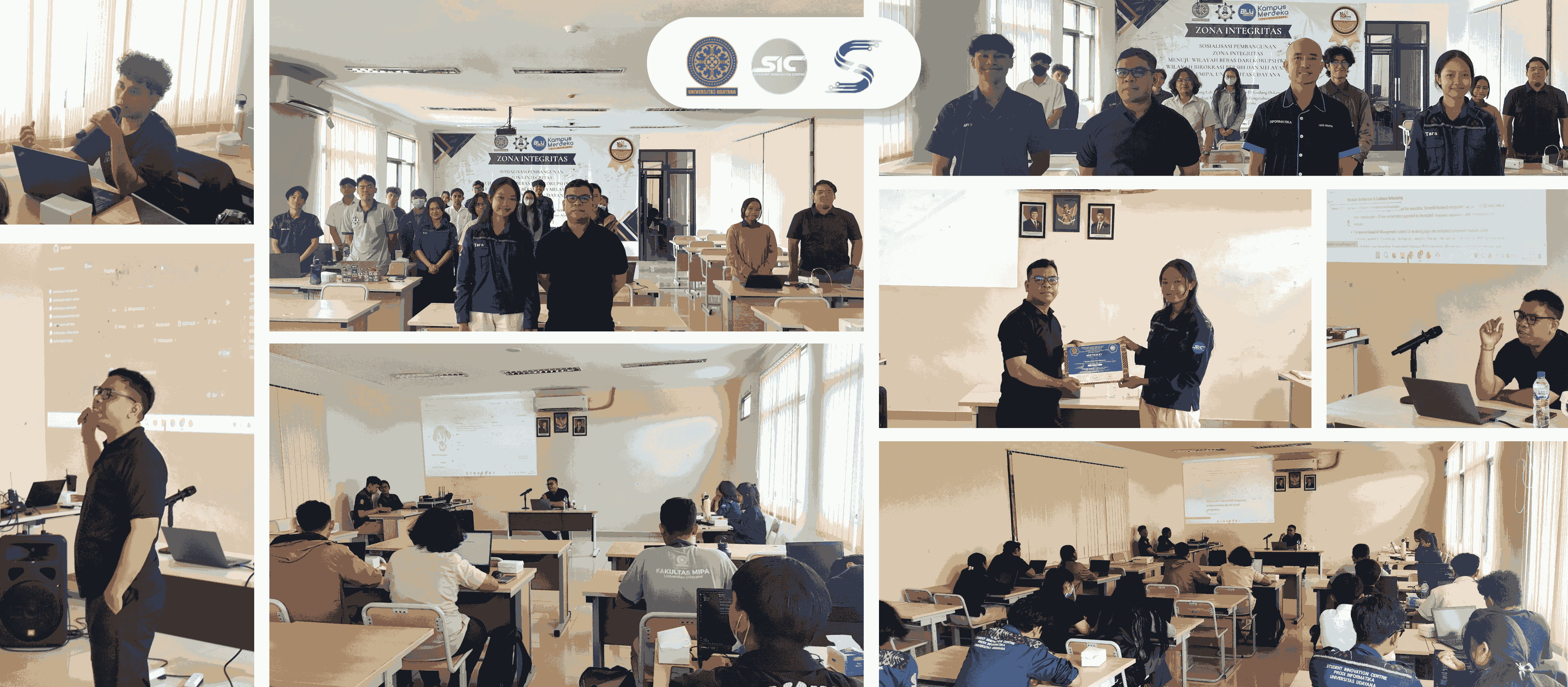
The Informatics Study Program at the Faculty of Mathematics and Natural Sciences (FMIPA), Udayana University, successfully hosted the National Seminar on Information Technology and Its Applications (SNATIA) 2026 on Saturday, August 29, 2026. Centered on the theme "Cybersecurity Transformation in the Artificial Intelligence Era," this annual event was held in a hybrid format at the FMIPA Dean's Building on the Jimbaran Campus, with participants also joining online.
While the rapid advancement of Artificial Intelligence (AI) offers high efficiency in industrial automation and data analysis, it simultaneously introduces new challenges to the cybersecurity ecosystem. Cybercriminals are now leveraging AI to execute attacks with greater precision. In response to this phenomenon, SNATIA 2026 served as a strategic forum to discuss governance, early anomaly detection, and AI-based real-time incident response.
The event began with a general seminar featuring two experts in the fields of cybersecurity and digital law enforcement.
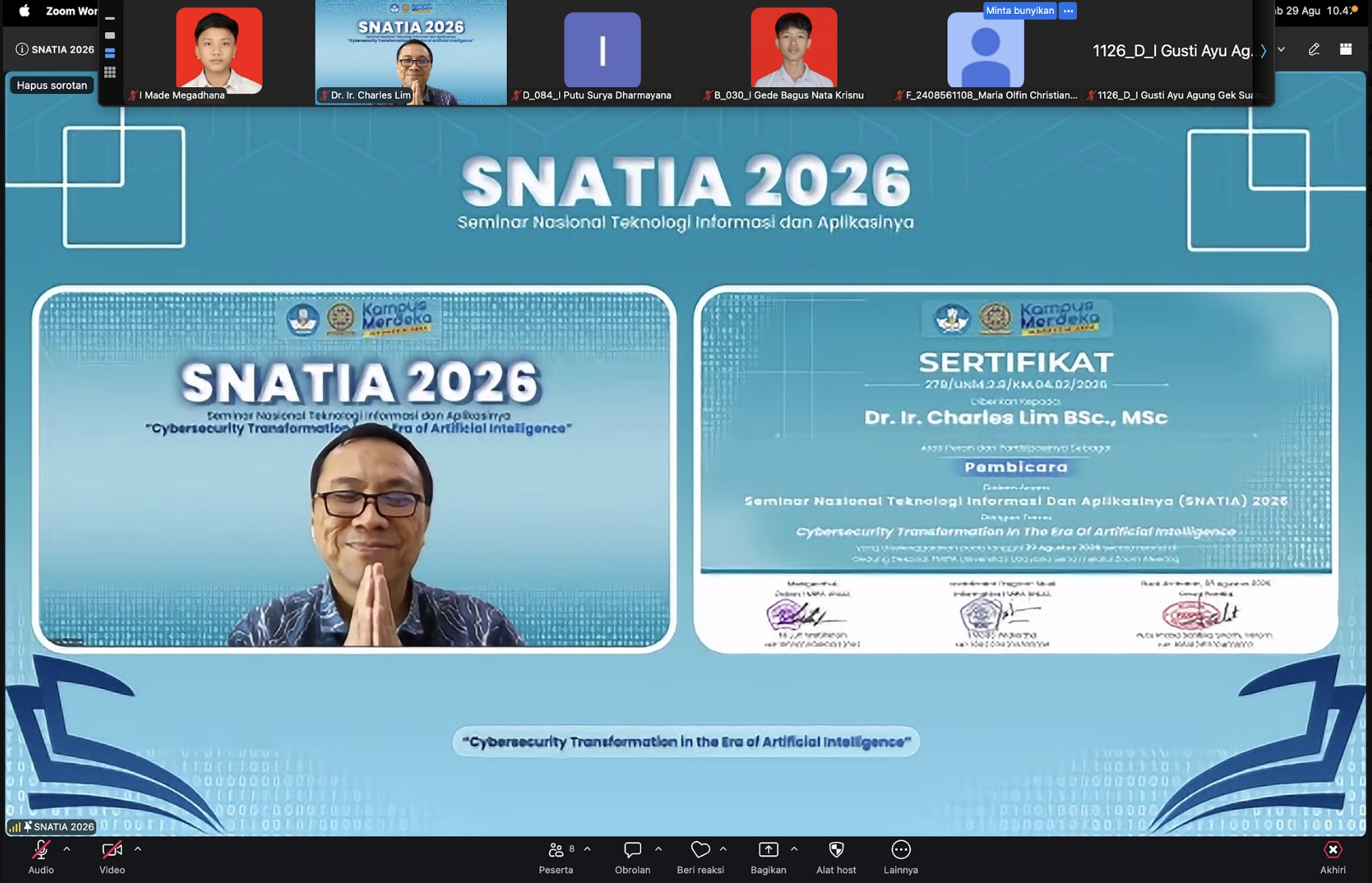
The first speaker, Dr. Ir. Charles Lim, B.Sc., M.Sc. (Chief of Operations & Co-Founder of ACAD-CSIRT and a lecturer at Swiss German University), presented a session titled "AI as the New Cyber ??Defender: Transforming Security Operations Centers (SOC)." He highlighted AI's crucial role in strengthening digital defenses and transforming SOC operations to enable faster detection of potential cyber threats.
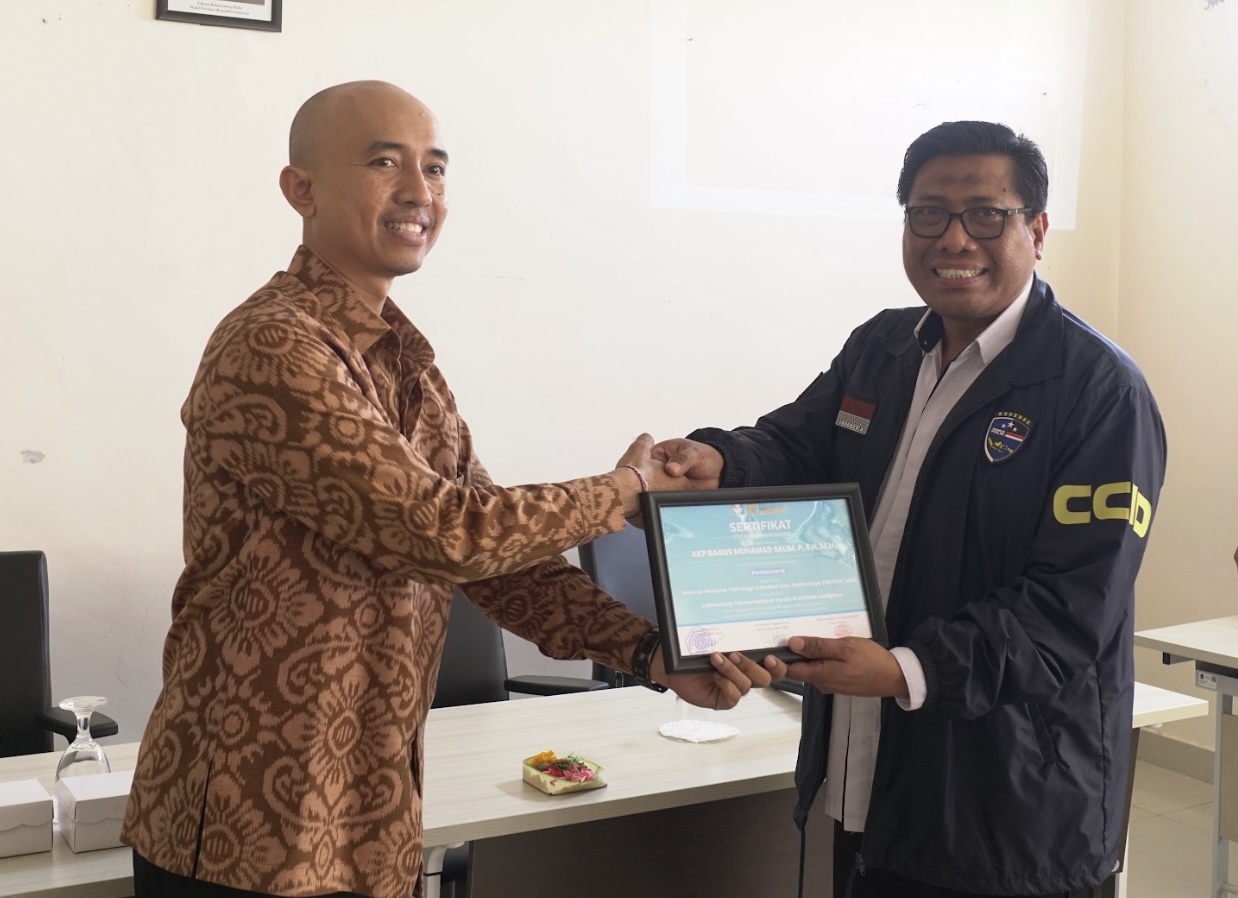
The general seminar session continued with a presentation by AKP Bagus Putra, S.H., M.H., from the Cyber ??Investigation Directorate of the Bali Regional Police. In his presentation, "Cybersecurity Transformation in the Artificial Intelligence Era: Facing the Changing Threat Landscape and Building Digital Resilience in the AI ??Era," he emphasized the importance of synergy among regulations, law enforcement, and public awareness in building robust digital resilience amidst the dynamic nature of AI-driven cybercrimes.
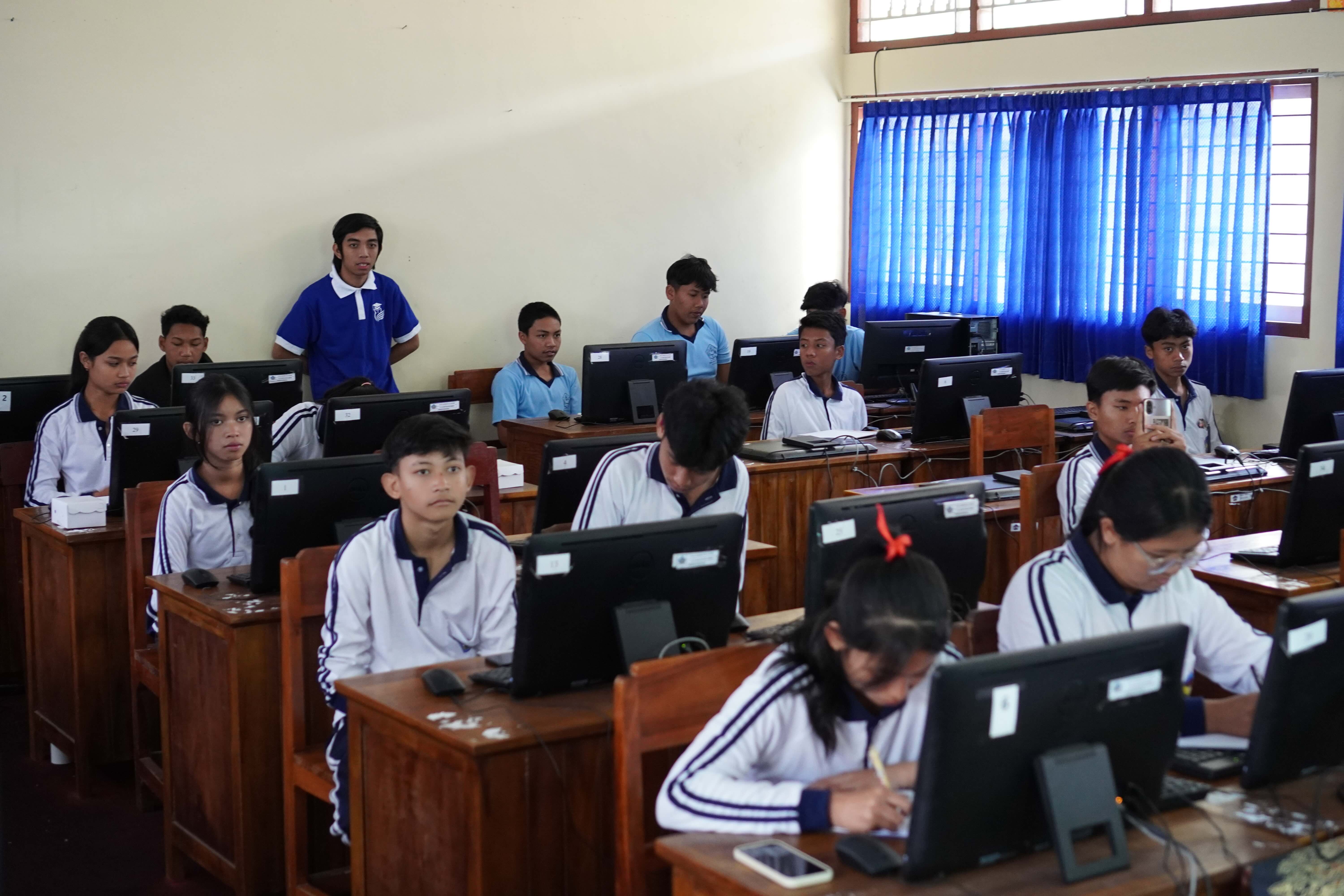
Following the general seminar, the event proceeded with parallel paper presentation sessions. A total of 132 research papers were presented by researchers and presenters to document various innovations and the latest research in the field of information technology.
SNATIA 2026 drew great enthusiasm from the academic community, particularly informatics students. The event attracted a total of 240 participants, comprising 108 who attended in person at the venue and 132 who joined online.
Through the hosting of SNATIA 2026, Udayana University aims to cultivate a generation of young people and IT practitioners who are not only adaptable to the evolution of AI technology but also resilient in safeguarding the security of Indonesia's digital ecosystem in the future.
Gallery
FACULTY OF MATH AND SCIENCE