 EN
EN
 INA
INA
Informatics Laboratories
```html
Informatics Laboratories
Informatics Study Program, Faculty of Mathematics and Natural Sciences, Udayana University
The laboratories of the Informatics Study Program are learning support facilities used for practical activities, project development, student research, and competency development in accordance with the curriculum.
These laboratories support the implementation of the Independent Learning– Independent Campus program (MBKM) and Outcome-Based Education (OBE), particularly in programming, computing, information systems, computer networks, digital security, multimedia, artificial intelligence, big data, and user interaction and experience.
6
Laboratories
301
Total Capacity
08.00–16.00
Service Hours
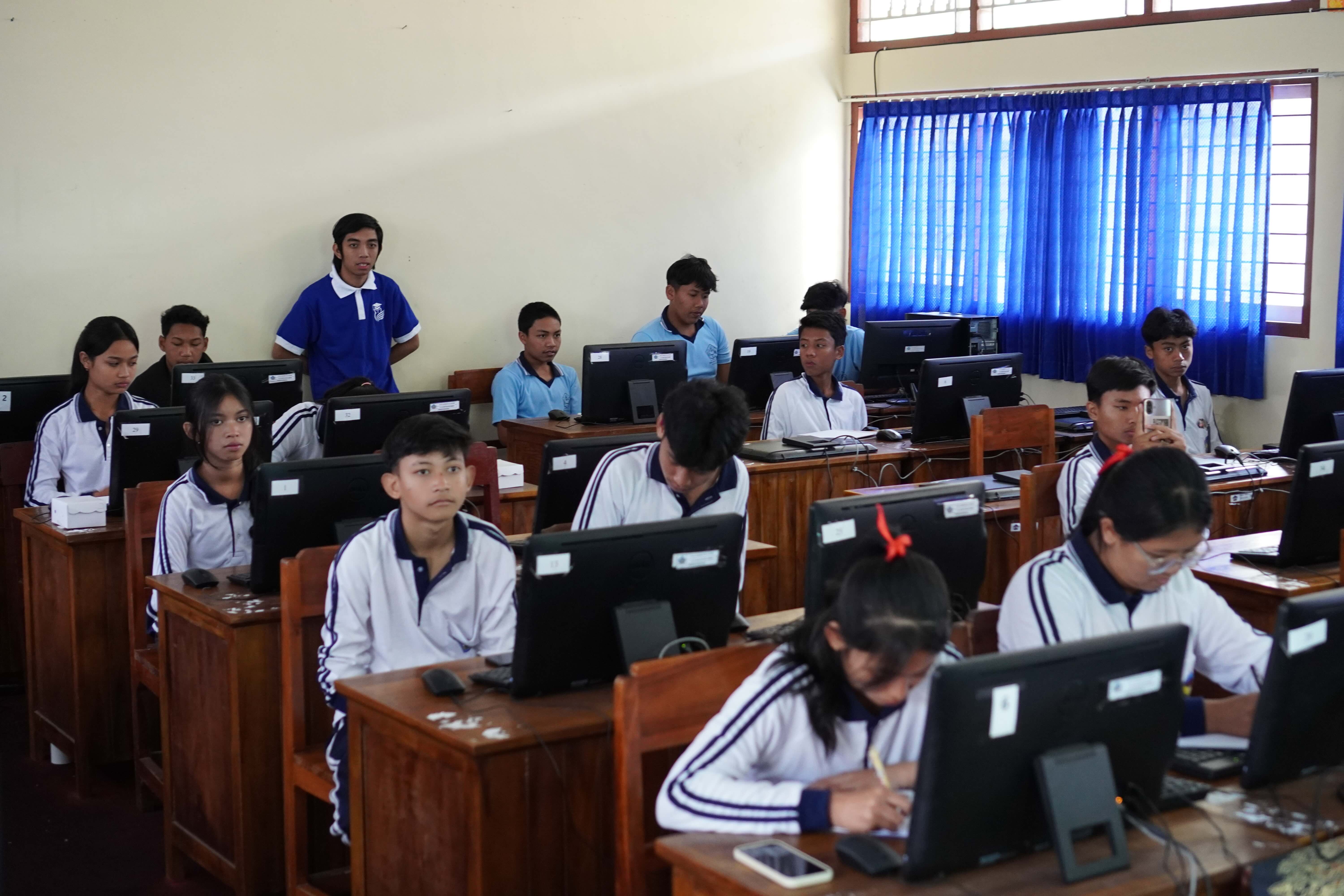
Laboratory Documentation
Documentation of laboratory facilities supporting academic activities, practical sessions, research, and student competency development.

Information Systems Laboratory

Ergonomic Computing Laboratory

Computing Laboratory
List of Laboratories
The following laboratories support learning, practical sessions, research, and competency development for Informatics students.
Net-Centric Computing Laboratory
Supports learning activities in computer networks, data communications, wireless technologies, network security, and network-based computing.
Programming Laboratory
Supports courses in programming, algorithms, data structures, software engineering, and application development.
Microcomputing Laboratory
Supports learning activities related to small-scale computing devices, embedded systems, wireless technologies, the Internet of Things, and wireless sensor networks.
Information Systems Laboratory
Supports learning activities in information systems, databases, system requirements analysis, e-commerce, information management, and business applications.
Computing Laboratory
Supports general computing activities, data processing, multimedia, artificial intelligence, big data, and the development of computing-based solutions.
Ergonomic Computing Laboratory
Supports learning activities in human-computer interaction, interaction design, user experience, interface evaluation, and usability testing.
FACULTY OF MATH AND SCIENCE