 EN
EN
 INA
INA
Informatics Study Program Introduces Academic Environment and College Life to New Students
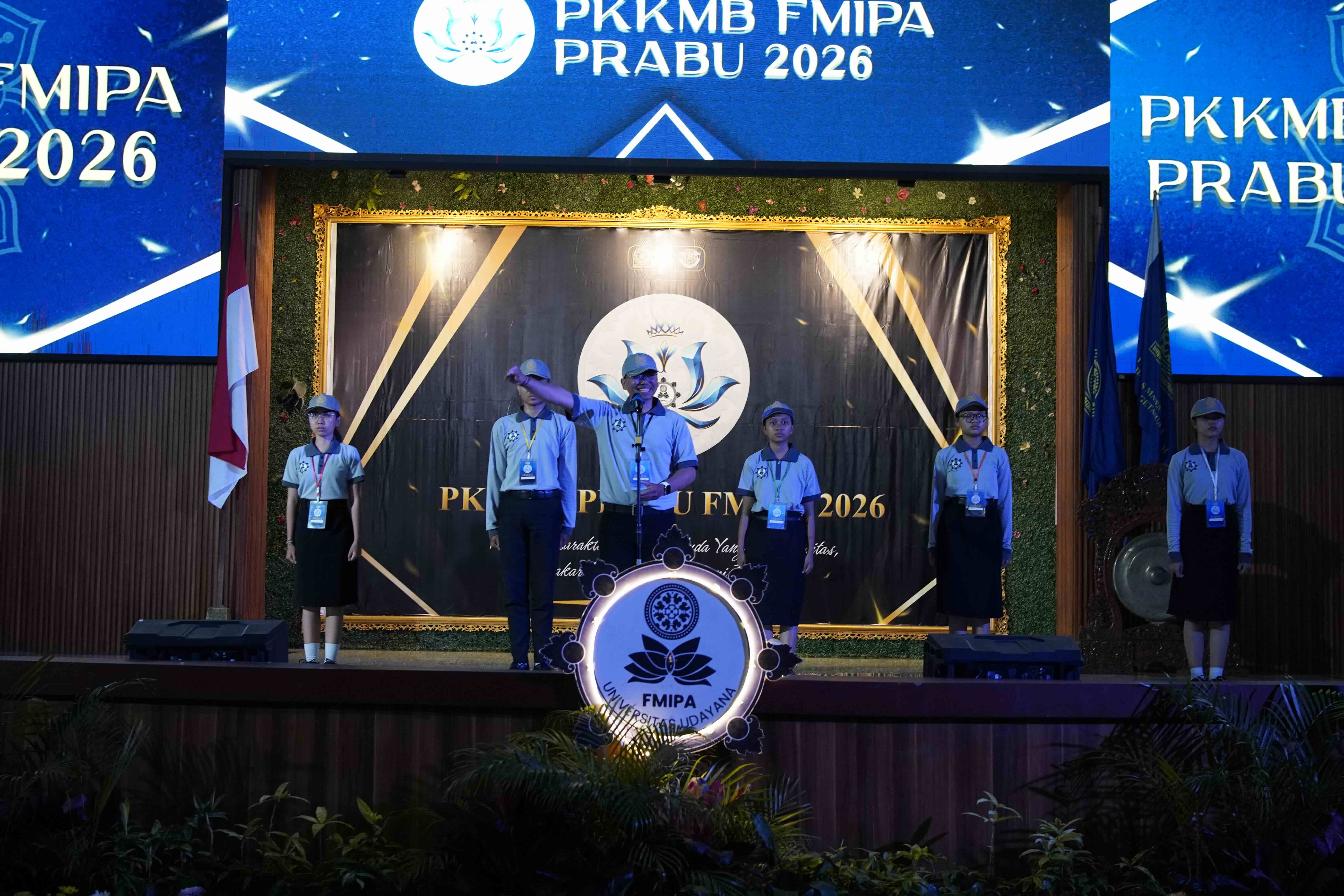
The Informatics Study Program at the Faculty of Mathematics and Natural Sciences (FMIPA), Udayana University, held its Campus Life Introduction for New Students (PKKMB) program on Tuesday, August 4, 2026. This event was part of the broader FMIPA-level PKKMB series at Udayana University, which took place from August 4 to 5, 2026.
The Informatics Study Program's PKKMB event served as an opportunity for new students to familiarize themselves with the academic environment, faculty members, curriculum, facilities, and the various activities available to them during their studies in the program.
The event began with a presentation on the Informatics Study Program profile delivered by the Study Program Coordinator. During the presentation, new students were introduced to the program's history and development, its academic vision and mission, organizational structure, internal committees and teams, laboratories, faculty expertise groups, and various student activities.
A key focus of the presentation was the program's academic vision: to advance the field of Informatics—specifically in Artificial Intelligence and Big Data—to produce graduates who are excellent, independent, and culturally grounded. Additionally, students were introduced to the program's mission, which encompasses student-centered education, research development in Informatics (particularly in Artificial Intelligence and Big Data), and community service activities based on research findings and local wisdom.
Understanding the OBE Curriculum and Interest Tracks
New students also received an explanation regarding the Informatics Study Program's curriculum, which is based on the Outcome-Based Education (OBE) framework. The curriculum presentation outlined the graduate learning outcomes that students must achieve during their studies, covering aspects such as ethics and personal qualities, teamwork skills, knowledge mastery, lifelong learning, problem analysis, computational technologies and tools, and the ability to conduct empirical research.
In addition to the curriculum, students were introduced to various interest tracks that can guide their competency development throughout their studies. These tracks include Text Mining, Knowledge Discovery and Management, Music Information Retrieval, Multimedia Systems, Digital Security, Wireless Sensor Networks, Smart Computing, Big Data Processing and Business Management, and User Interaction and Experience. This introduction aims to help students understand the various fields of study within Informatics from the very beginning and to start identifying areas that align with their interests and personal development plans.
Getting to Know Faculty, Laboratories, and the Academic Environment
The program continued with an introduction to the Informatics Study Program faculty. New students were introduced to lecturers based on their areas of expertise, as well as the various laboratories that support the learning process and student competency development. The faculty expertise groups within the Informatics Study Program include Data Science, Information Management, Natural Language Processing, Machine Learning, Computing and Intelligent Systems, and Human-Computer Interaction.
An overview of laboratory facilities was also provided to show students that learning in the Informatics Study Program extends beyond the classroom; it is supported by various laboratory facilities dedicated to practical work, research, technology development, and innovation.
Discussions with Academic Advisors and Course Registration (KRS)
Following the introduction to the study program and faculty, the event proceeded with discussions between new students and their Academic Advisors. This session offered students the opportunity to consult directly on study planning and university life.
Students also gained an understanding of the Academic Advisor's role in guiding them through study planning, course registration (KRS) consultations, monitoring academic progress, and resolving challenges encountered during their studies.
Subsequently, new students received guidance on the course registration process. This activity marked the first step for students in planning their academic journey within the Informatics Study Program.
Shaping the Informatics Student Journey
During the event, new students were introduced to various activities available to them throughout their time as Informatics students—ranging from lectures and practical sessions, workshops and guest lectures, research and community service, and student organizations to personal development and the completion of their final projects.
Students were also introduced to student organizations such as the Informatics Student Association (HIMAIF) and the Student Innovation Center (SIC), which serve as platforms for developing skills, creating work, innovating, and contributing.
Through this series of PKKMB activities, the Informatics Study Program hopes that new students will not only familiarize themselves with the campus environment and academic processes but also gain an understanding of their personal development trajectory throughout their time as students.
The Informatics Study Program's PKKMB activities are intended to serve as the starting point for Informatics students' journeys—enabling them to learn, create, innovate, and make an impact—so that they may ultimately become outstanding, independent, and culturally grounded Informatics graduates.
FACULTY OF MATH AND SCIENCE